Research Portfolio
4 projects across UAV/UGV navigation, LiDAR perception, SLAM, factor graph optimization, and ROS autonomy.
In the News
Research Projects
Collaborative Search & Rescue UAVs — U.S. Air Force & Kinnami
Active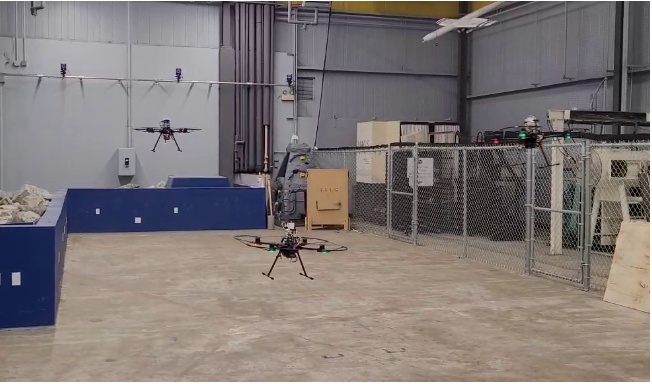
Contributed to a U.S. Air Force–funded project on autonomous UAV navigation in GNSS-denied environments, supporting Personnel Recovery (PR) and Combat Search and Rescue (CSAR) missions. Focused on multi-UAV coordination and robust, high-accuracy localization in degraded environments. Integrated the AmiShare communication system for real-time encrypted peer-to-peer UAV communication.
- Refined EKF for precise UAV localization in GNSS-denied, contested environments.
- Programmed autonomous navigation for coordinated multi-UAV CSAR missions.
- Integrated AmiShare communication system for real-time peer-to-peer UAV comms.
Autonomous Navigation of UAV/UGV Teams in Underground Tunnels
Published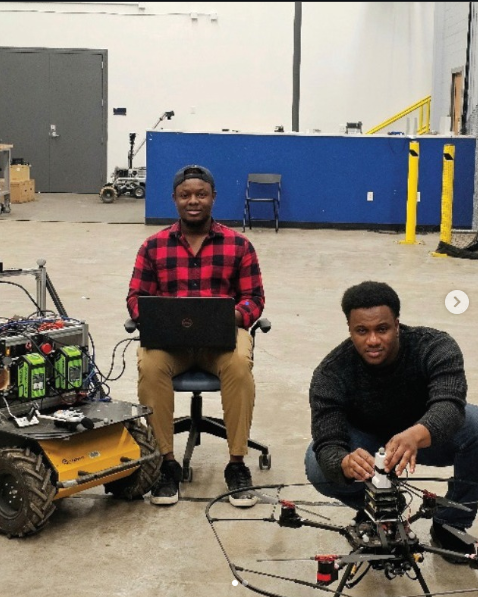
Contributed to a National Geospatial-Intelligence Agency (NGA)–funded project on cooperative UGV–UAV exploration in subterranean environments. Integrated UAV localization within a UGV reference frame to enable precise mapping and navigation in GPS-denied tunnels and caves. Focused on FGO-based state estimation to deliver accurate UAV trajectories and support resilient multi-robot autonomy for underground search and rescue missions.
- Achieved 3D localization RMS error <0.6 m over UAV flight trajectories >20 m in subterranean trials.
- Enabled coordinated UGV–UAV exploration for underground mapping in realistic tunnel environments.
- Advanced autonomous multi-robot capabilities for GPS-denied search and rescue scenarios.
UAV Position Estimation via LiDAR-Based 3D Object Detection
Published · IEEE/ION PLANS 2023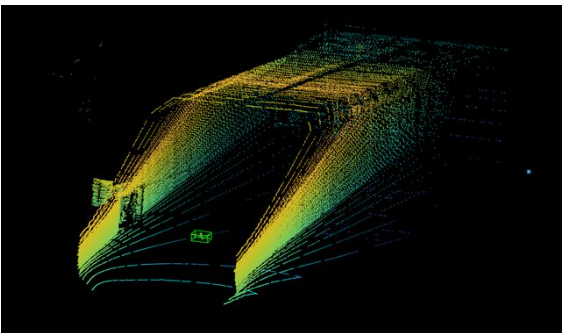
Master's thesis project developing a LiDAR-based UAV position estimation system using the PointPillars deep learning architecture for real-time 3D object detection. Created a custom dataset of 7,000+ annotated LiDAR scans and achieved a 30% improvement in localization accuracy over traditional point cloud clustering methods.
- Created dataset of 7,000+ annotated LiDAR scans for UAV detection model training.
- Implemented PointPillars for real-time UAV detection and localization.
- Achieved +30% improvement in localization accuracy vs. traditional clustering methods.
NASA Space Robotics Challenge Phase 2 — Team Mountaineers
NASA · 6th Place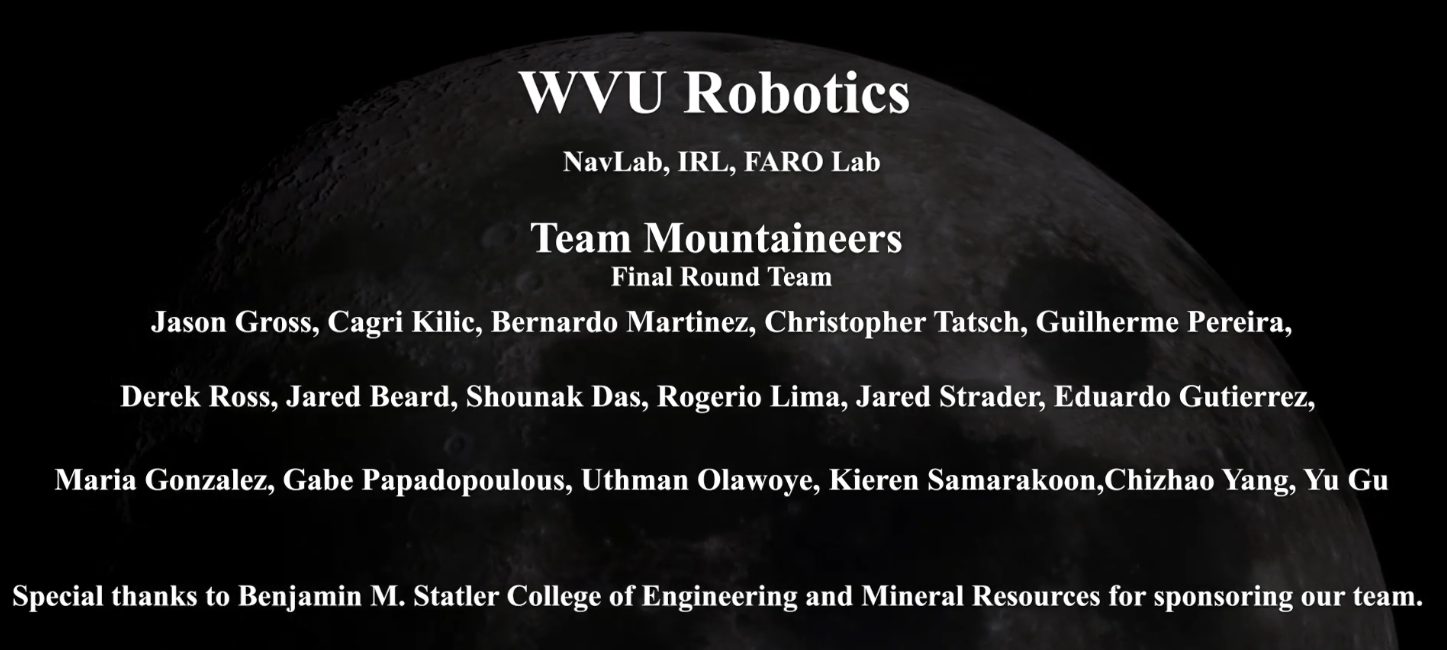
Participated in NASA's Space Robotics Challenge Phase 2, a ROS/Gazebo simulated autonomous lunar rover competition, as part of WVU's Team Mountaineers. Supported the perception team with image acquisition, processing pipelines, and sensor fusion for autonomous lunar surface operations. The team placed 6th in the final round.
- Team placed 6th nationally in NASA's Space Robotics Challenge Phase 2 final round.
- Developed image acquisition and processing pipelines for autonomous lunar perception.
- Contributed sensor fusion components supporting autonomous rover surface operations.